AVS finds the calibrations. CMS runs the job.
One platform for verifying what a repair requires and running the calibration business around it.
A standalone quoting and scrubbing engine
AVS takes a body shop estimate in and returns a verified, documented statement of the calibrations and related operations the repair requires.
- Automated only at 90% accuracy, tested manufacturer by manufacturer
- Every operation tied to the estimate line that triggered it
- Each result linked to the governing OEM procedure
Six steps, one record
Submit the estimate
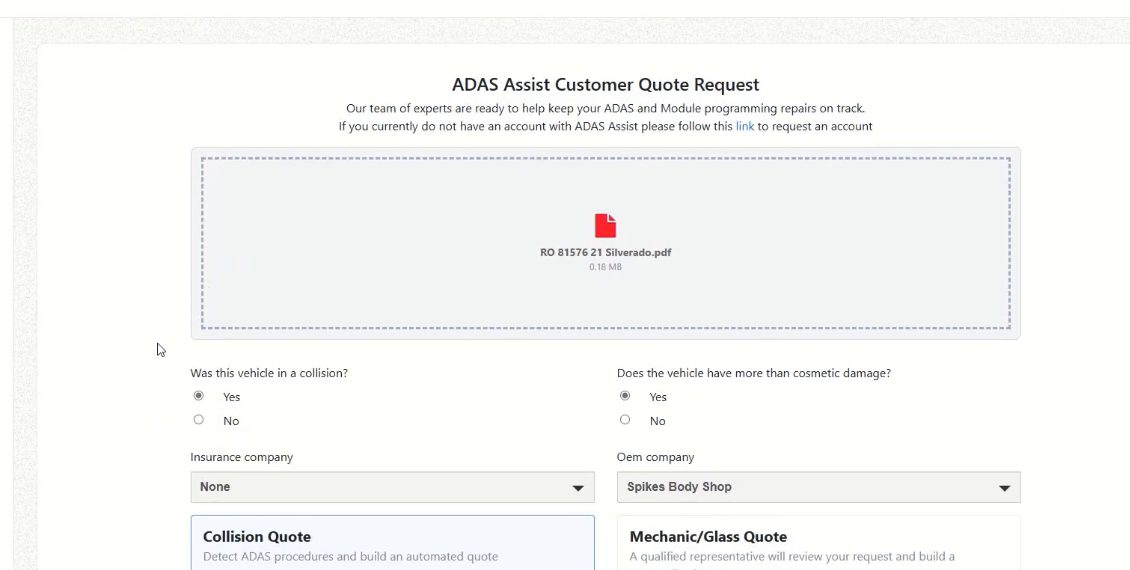
The shop uploads its estimate, for example a PDF from its estimating system, through the customer quote request.
Add the context
The shop answers whether the vehicle was in a collision and has more than cosmetic damage, then selects the insurer and quote type: collision, or mechanical/glass.
AVS verifies
The engine reads the estimate, identifies the vehicle and maps each repair line against OEM procedures. Quoting is automated only where AVS has reached 90% accuracy for that manufacturer. Anything below that bar, an ADAS Assist employee builds the quote.
Review the quote
The shop receives quote details for the VIN, listing each required operation with the estimate line or answer that triggered it.
Access the procedures
Each operation links to the governing OEM documentation, so the technician or estimator sees exactly what the calibration requires and why.
Invoice
Once the work is complete, the final invoice is generated from the same record.
Every result shows its work
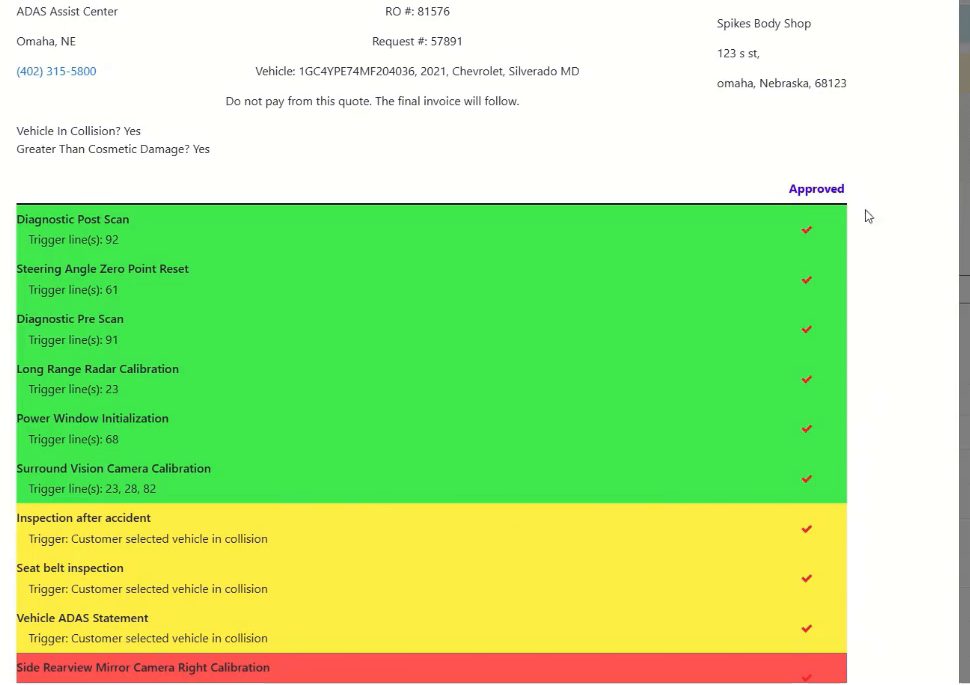
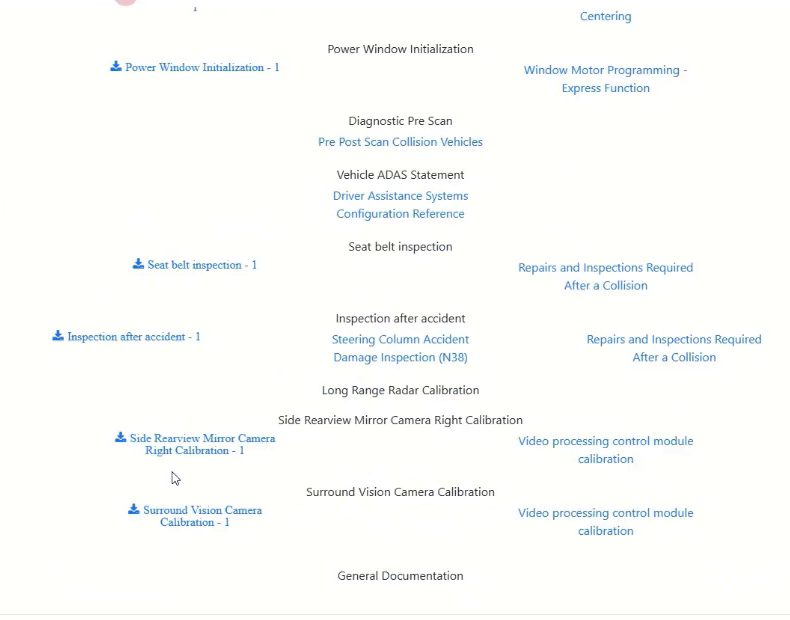
AVS doesn't hand back a bare list. On this demonstration request for a 2021 Chevrolet Silverado, the pre- and post-scans, steering angle reset, long range radar calibration, power window initialization and surround vision camera calibration are each tied to specific estimate lines.
Operations required because the vehicle was in a collision, like post-accident and seat belt inspections and a vehicle ADAS statement, are identified separately with that trigger noted. Color coding makes the categories easy to scan.
The tech and the estimator see the same source
The documents view connects each operation to its governing OEM procedure, from scan requirements to camera and radar calibration and post-collision inspections. That closes the gap between what the software says and what the OEM requires.
I particularly appreciate having the OEM calibration requirements, supporting documentation, and explanations of the necessary procedures readily available in one place. It takes a lot of the guesswork out of the process and makes it much easier to manage an increasingly complicated part of collision repair.
Run the entire operation from one place
Accuracy solves the liability problem, but running a calibration business takes more than a correct answer on a scan report. CMS uses the same job records AVS creates.
Pricing
Set your own pricing for the operations you perform.
Technician management
Manage your technicians and team members in one system.
Daily technician calendar
Always know who is where and what they are calibrating.
Scheduling
Schedule jobs directly from verified requests.
Invoicing and billing history
Generate invoices without switching to a second piece of software.
Body shop portal
Your shop customers send requests, track open and closed requests, manage their team and review billing history.
The Calibration dashboard makes several important parts of our workflow at Speedway Collision easier to manage. … These features help us stay organized, reduce administrative time, and keep the information we need readily available.